Pricing can feel like one of the more uncomfortable parts of running a business. Charge too much and you worry about losing customers. Charge too little and you risk undermining your value or your margins. The good news is there are specific methods for pricing your products that cut out some of the guesswork. Understanding cost-, competition- and value-based pricing can help you make pricing decisions that are grounded in reality.
Cost-based Pricing
Cost-based is exactly what it sounds like. You take the cost of providing your product or service and multiply that by a markup. Sometimes this is very simple – you buy a hoodie for $15 wholesale, multiply by three, and sell it for $45. For a business like Crochet Kitty that makes durable, high-quality (and extremely cute cat toys, cost-based pricing would involve calculating the cost to make a single toy in terms of thread, fabric, stuffing, catnip and labor. That total could then be multiplied by a markup to calculate a price.
Whatever markup you choose, it should ideally cover your direct costs of goods sold including materials and labor, as well as your other operating expenses such as rent, utilities, payroll and marketing. You also need to understand how many sales it would take at that price to cover costs and pay yourself.
Competition-based Pricing
Competition-based pricing starts with understanding where and how your customers can buy the same or similar products elsewhere. If you believe your product or service is of a higher quality than what competitors offer, you may be able to charge a little bit more. If you are newer to the market and still building credibility, a lower starting price can help you win early customers who then experience the quality of what you offer. Just be careful not to price too low, because some customers may read that as a sign of lower quality.
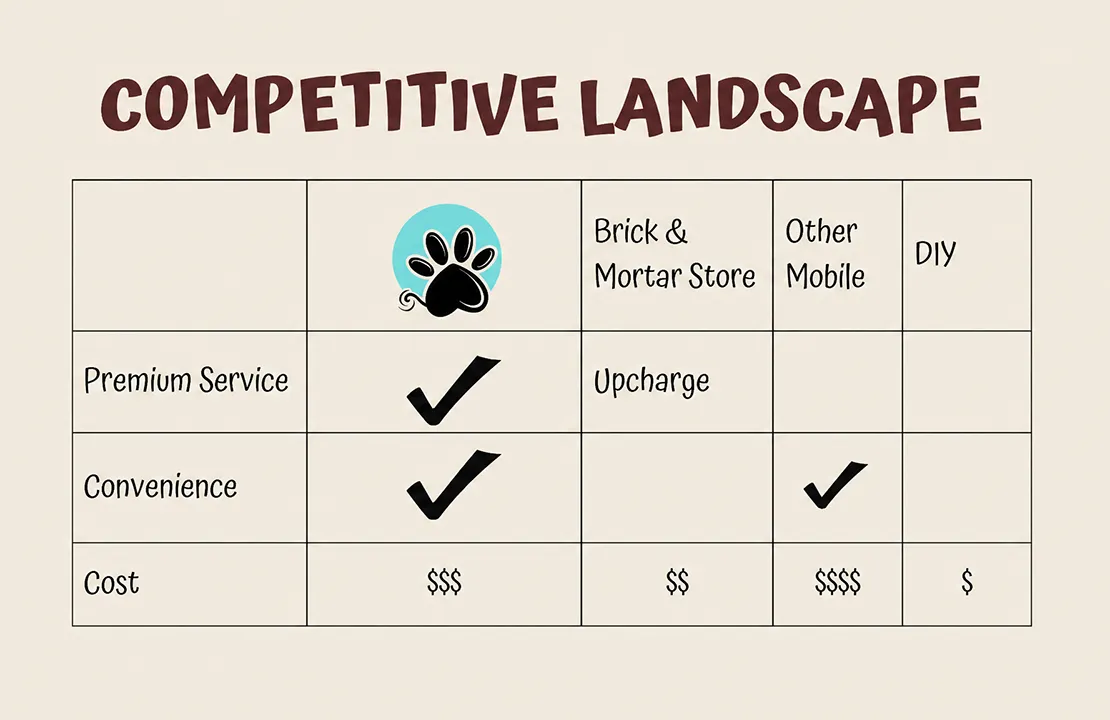
The key to this pricing strategy is understanding what makes your business more or less competitive. Large companies often have competitive advantages in bulk purchasing that helps them keep prices low and offer more standardized products. Your advantage might be something different, like location, customization, quality or uniqueness. Whatever it is, you should be able to clearly explain why your offerings are more appealing to your target customers (and why that justifies your pricing). For small businesses & startups, it’s rarely all about just having the lowest price. A useful tool for understanding how customers think about you in comparison to other options is a competitive matrix like the one shown below for Wiggles & Wash, a mobile pet groomer in the Canton area. This chart shows who the competitors are —including other professionals and customers who groom their own pets — and how Wiggles & Wash is the right mixture of quality, price and convenience that appeals to a specific segment of customers willing to pay for it:
Cost- and competition-based pricing tend to work best in crowded markets where customers already have a solid sense of what things should cost. For example, lattés, hoodies, dog grooming services, gas and groceries are offered by many different businesses, and you probably won’t get helpful information by asking a hundred people what they think the price of any of these offerings is or should be. It is far more important to understand your costs and how your pricing compares to competitors.
A good example of a business that combines these two strategies is Everlane, an online clothing retailer that shows customers its costs and how its prices compare to a typical competitor. This transparency reinforces that its pricing is both cost-informed and aligned with market expectations.
Value-based Pricing
Value-based pricing, on the other hand, shifts the question from “What does this cost me?” to “What is this worth to my customer?” This approach works best when your product or service stands apart from competitors and when your costs do not tell the whole pricing story. For example, if you are creating a new custom software solution, your product may be unique from competitors, but the cost to provide a software subscription in terms of cloud and hosting is pennies per month. To price this well, you need to know the value that this software provides or unlocks for a customer. In some cases, that value can be calculated by estimating how much money your product helps a customer earn or save each year. In other cases, it is about understanding customer perception and willingness to pay.
You could start by asking yourself questions like:
- What price would feel too expensive?
- What price would feel expensive but not out of the question?
- What price would be a good deal or a bargain?
- What price would feel so low that it would raise concerns about quality?
Different customer segments will often lead to different answers. Customers value different features, outcomes and levels of service, and those differences should be reflected in how you package and price your offerings.
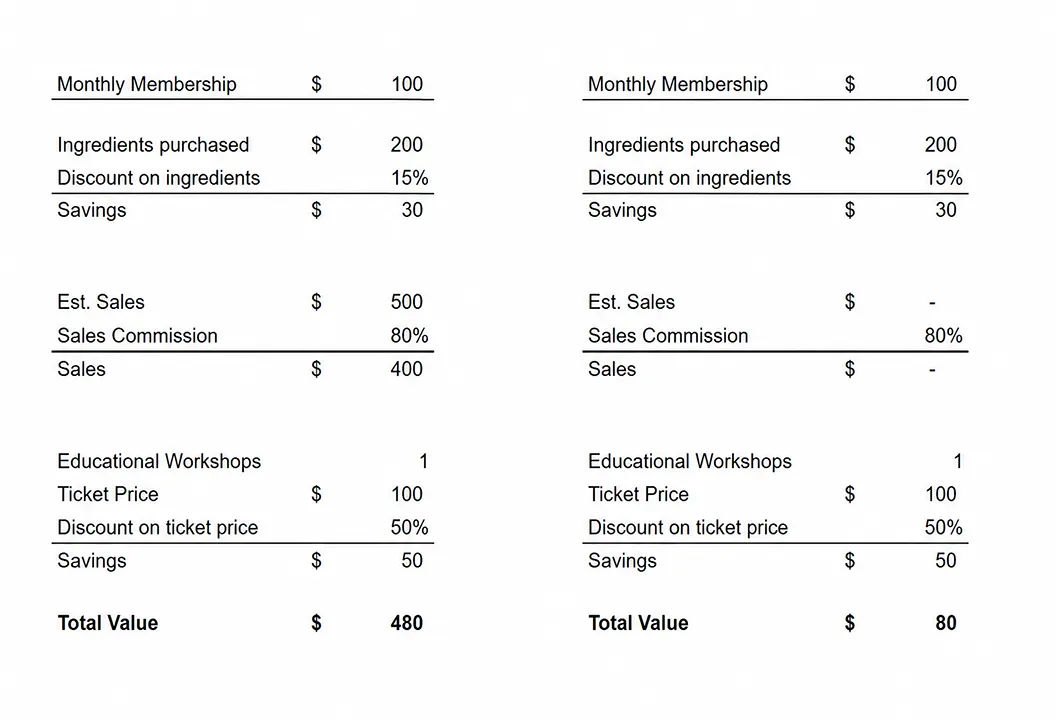
It is not just software startups that can use value-based pricing, though. Consider, for example, a commercial baking kitchen membership. You need to understand what the value of the membership is to a customer. The value of that membership depends heavily on how much a member is producing, how much they are spending on ingredients and how much revenue they are generating each month:
When you understand your costs, your competition, your customers and the value you create, you can feel a little more confident about your pricing decisions. For more foundational business concepts, explore JumpStart’s webinars and cohort-based programs here.
Share This Article With Your Network!